What to Do About Redundant Prepuce (Long Foreskin)? Is Circumcision Necessary? How Common Is It?
Redundant prepuce, also known as extra loose foreskin prepuce, is a common condition affecting many adult men worldwide. The foreskin (prepuce) naturally protects the glans (head of the penis). However, if the foreskin is excessively long or associated with phimosis, it can make cleaning difficult, leading to bacterial buildup, infections, or inflammation of the glans (balanitis).
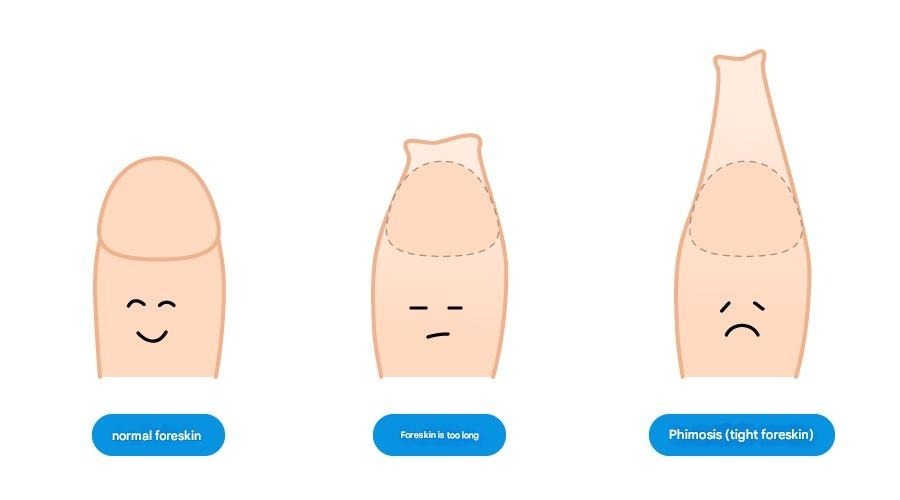
Definitions of Redundant Prepuce and Phimosis
1. Redundant Prepuce (Long Foreskin) Definition:
Redundant prepuce refers to foreskin that is longer than normal, fully covering the glans penis even when flaccid.
Normally, during erection, the foreskin can retract fully to expose the coronal groove. If you can retract the foreskin easily for cleaning, it generally doesn't affect health. However, if the foreskin adheres to the glans and cannot be fully retracted, that's phimosis.
2. Phimosis Definition:
Phimosis occurs when the foreskin opening is narrow or adheres to the glans, preventing full exposure of the glans (including partial exposure). Forcible retraction may cause tearing, injury, or the foreskin getting stuck behind the coronal groove (paraphimosis). It includes congenital phimosis and acquired (pathologic) phimosis.
Congenital Phimosis:
Common in children; the foreskin covers the glans and doesn't retract. As the child grows, it often loosens naturally.
Pathologic Phimosis:
Caused by injury or inflammation, leading to inability to retract, painful urination, foul odor, or swelling.
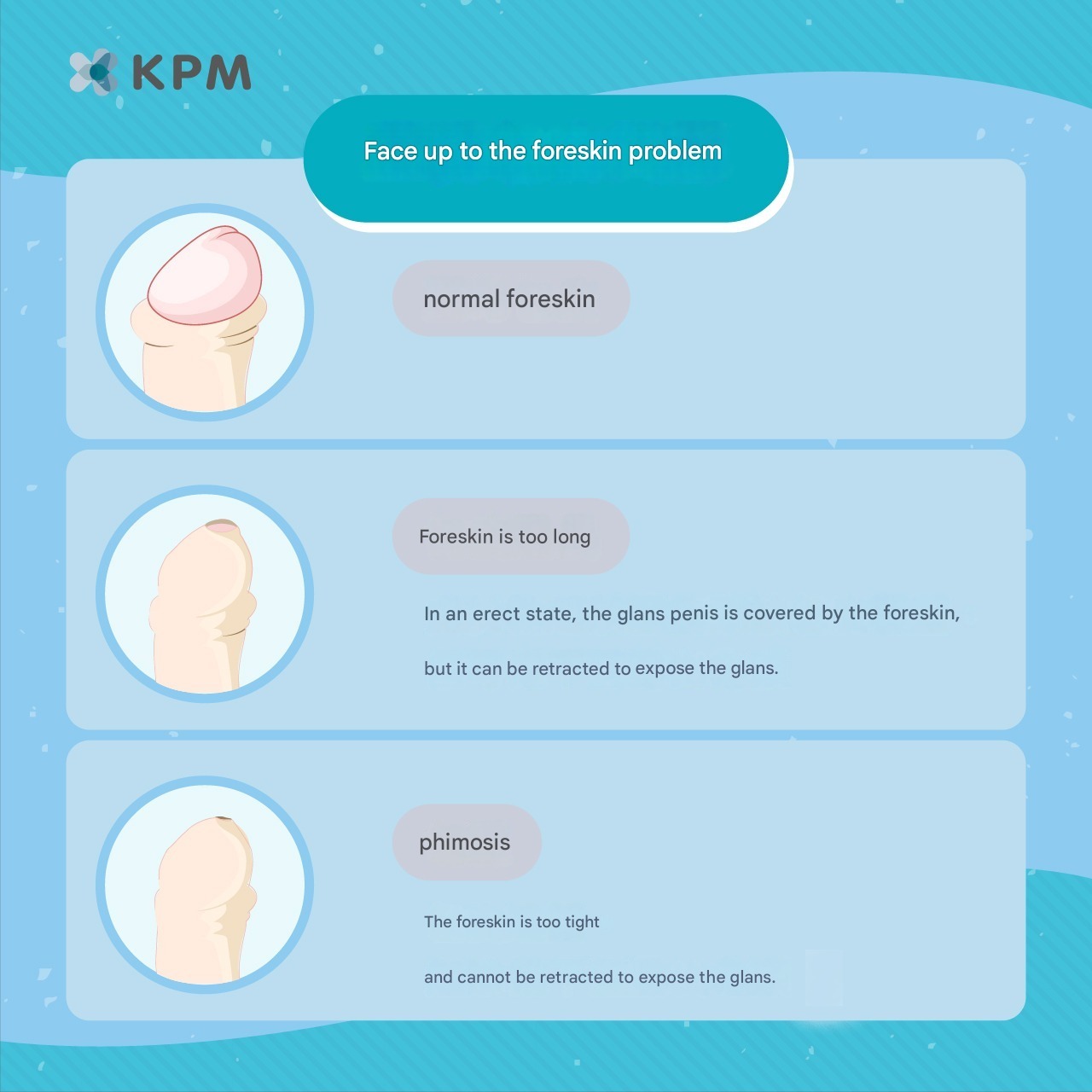
Is Redundant Prepuce the Same as Phimosis?
The key difference between redundant prepuce (long foreskin) and phimosis is: whether the foreskin can be fully and smoothly retracted to the coronal groove.
If the glans cannot be fully exposed, it's phimosis, which can cause hygiene and health issues requiring treatment.
If it's just a long prepuce but retracts easily without affecting daily life, no treatment may be needed – regular cleaning is sufficient.
Paraphimosis: What to Do If the Foreskin Gets Stuck?
Paraphimosis is a medical emergency caused by a narrow or long foreskin problem getting trapped behind the glans after retraction, causing swelling, purple discoloration, and restricted blood flow. Seek immediate medical help.
How to Handle Stuck Foreskin? 2 Steps to Rescue
Doctors may press the glans backward with thumbs while pushing the foreskin forward to release it over the coronal groove.
If unsuccessful, emergency surgery (dorsal slit) is needed to prevent glans necrosis – a serious complication.
Problems and Symptoms of extra Foreskin and Phimosis
An excess foreskin can hinder thorough cleaning, allowing smegma (natural buildup) and bacteria to accumulate. This may lead to:
Difficulty wearing condoms properly (slipping)
Reduced sexual pleasure or pain during intercourse
Smegma accumulation causing foul odor
Inflammation of glans or foreskin (balanitis)
Urinary tract infections
Aesthetic concerns
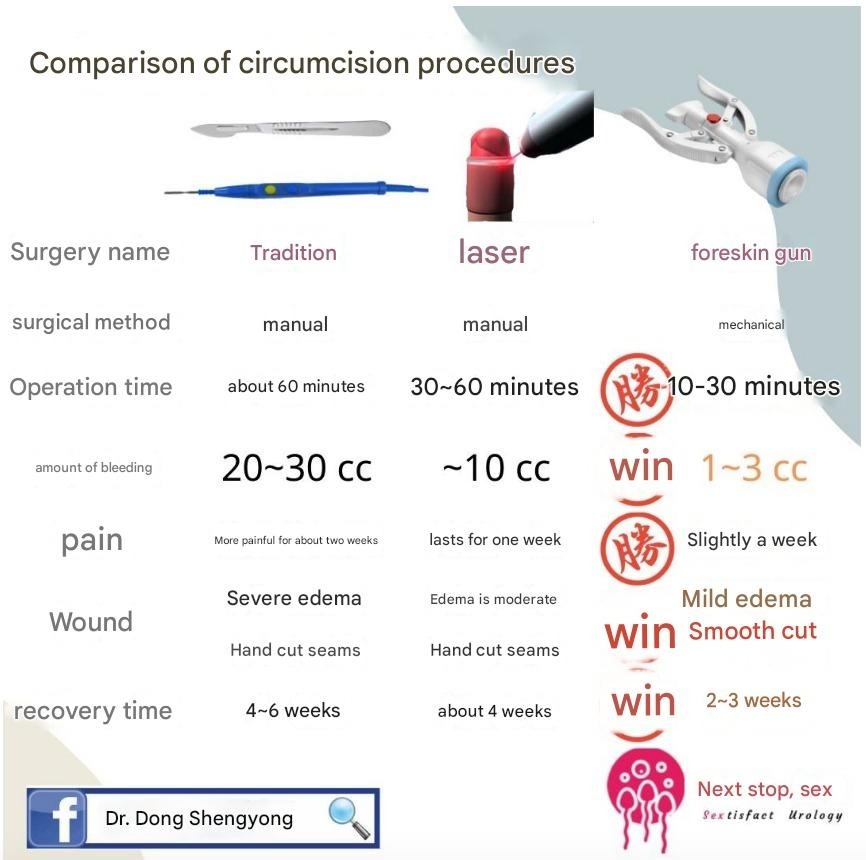
5 Treatment Methods for Phimosis
Beyond traditional circumcision, non-surgical options like steroid creams are now available for milder cases.
1. Daily Manual Retraction
For minor adhesions, gently retract daily; adhesions may separate naturally.
2. Topical Steroids
Apply corticosteroid cream to thin and loosen the foreskin, especially if most of the glans is exposed.
3. Traditional Circumcision
Classic method using scalpel or laser to remove excess foreskin.
4. Laser Circumcision
Modern technique with reduced bleeding and faster recovery.
5. Stapler Circumcision (Circumcision Gun)
Solve Phimosis for Cheap! No Surgery Needed
Stapler devices use sized rings for quick, minimal-wound removal with faster healing.
Surgery can seem scary. Non-surgical alternatives like foreskin correction rings allow coexistence with long loose foreskin.
Foreskin Correction Ring
Wear to hold foreskin back, exposing the glans without surgery.
Affordable and effective alternative to costly, bloody surgery.
Special blog discounts available.
Special condom adapters also available for intercourse.
Click below for more on Foreskin Correction Rings and discounts!

Surgery Option
If you're dealing with a retract the foreskin (redundant prepuce) and considering circumcision or other solutions, this comprehensive guide explains everything surgery option. Check it out here for clear, helpful long foreskin circumcision surgery option info before deciding!
Common Questions About Foreskin Long
1. My foreskin is long but retracts fully – do I need treatment?
No, if you can clean thoroughly and it doesn't affect life, monitoring and hygiene suffice.
2. Causes of long foreskin or phimosis?
Often congenital (narrow opening or slow penile growth); acquired from infections or injury.
3. Prevention and loosening adhesions?
Not always preventable, but gentle daily retraction and hygiene reduce risks. Consult a doctor for severe cases.
Frequently Asked Questions (FAQ)
What is male prepuce (foreskin) and its function?
The prepuce is skin covering the glans, protecting it from irritation and aiding lubrication during intercourse.
What is redundant prepuce or too much foreskin?
Excess foreskin fully covering the glans when flaccid; common and often harmless if retractable.
How common is redundant prepuce in adults?
Varies by population; studies show 9-13% in some groups, often asymptomatic.
Does elongated foreskin require circumcision?
Not always; only if causing infections, pain, or phimosis. Hygiene often suffices.
What are benefits of adult circumcision?
Reduced UTI/STI risk (including HIV), easier hygiene, lower penile cancer risk.
What are risks of adult circumcision?
Bleeding, infection, pain; higher than infant but low overall (1-4%).
Non-surgical options for phimosis in adults?
Topical steroids, manual stretching, correction devices; success varies by severity.
When is paraphimosis an emergency?
Always – seek immediate care to avoid tissue damage.
Can smegma buildup cause problems?
Yes, leading to odor, inflammation, or infections if not cleaned.
Sources: Cleveland Clinic, Harvard Health, NHS, medical studies.
This is informational; consult a doctor for personal advice.